The Odyssey
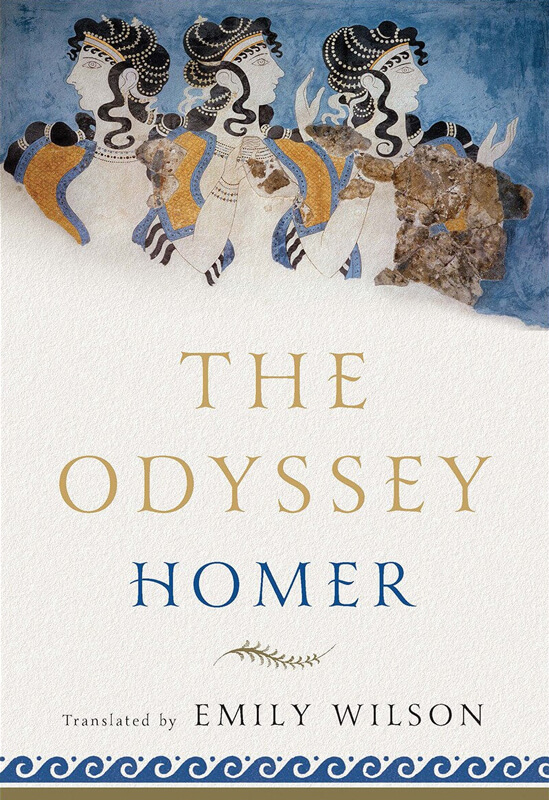
The Odyssey
Context before starting: my goal was to finish it seeing the movie next month! I’ve never studied it in any form, and my current knowledge stems mostly from 1) Hades games (lol), and 2) general cultural osmosis.
General thoughts: it’s really exciting! At some point I stopped looking up the pronunciation of every single name and just went with it. I had thought that the story would focus on the ten year journey getting home as a kind of linear adventure story—but it really isn’t. There’s so much about Telemachus, the gods, deceit, what happens when Odysseus does reach Ithaca… but also adventures like men getting eaten left and right (I shudder to think of how this will be depicted on screen…), shipwrecks, and perilous, godly encounters.
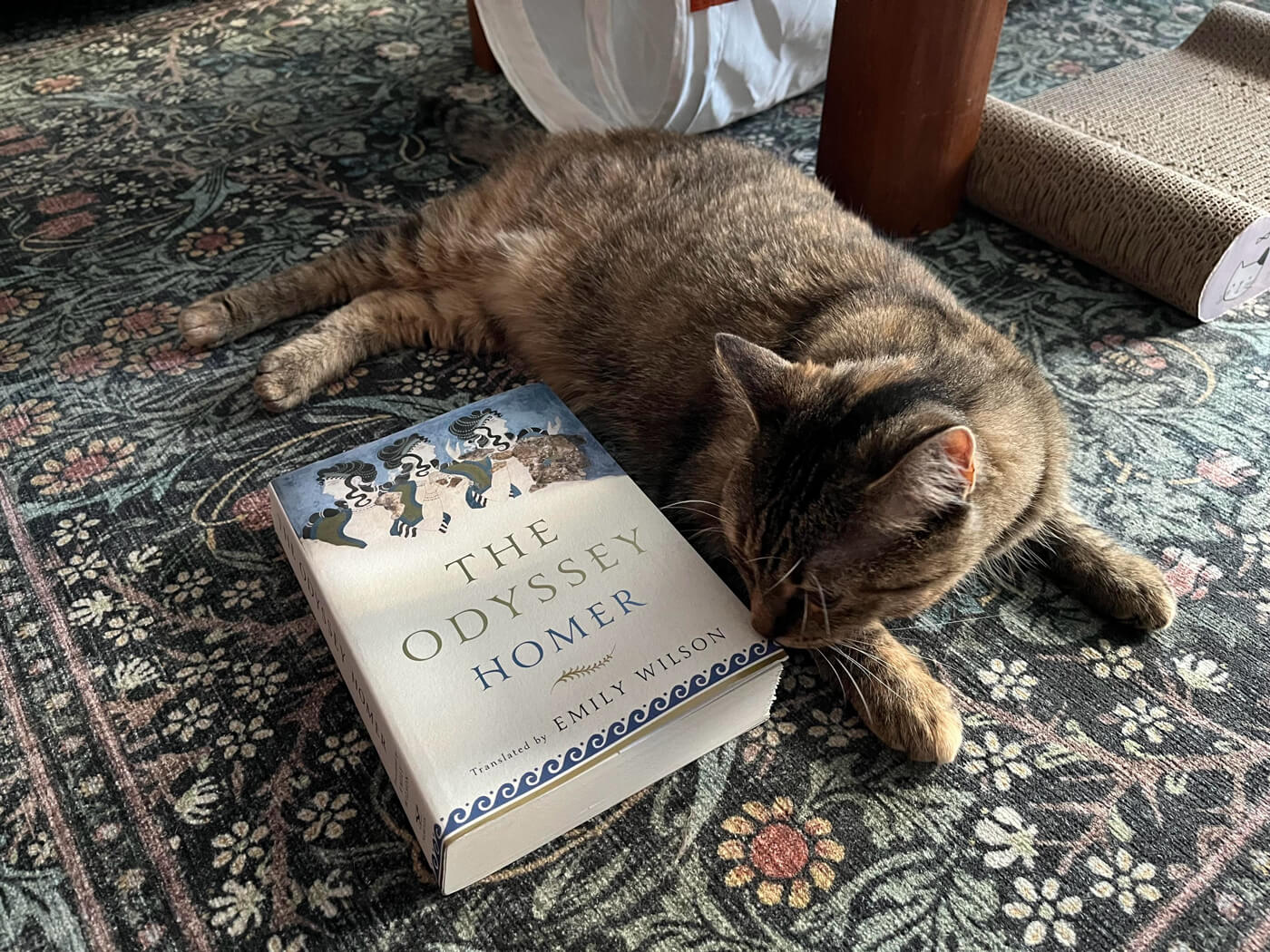
Introduction
Maybe an individual genius, a “Homer,” had a particularly important role in the creation of The Odyssey. But we should question the notion that a unified structure and coherent creative product must necessarily be seen as the result of an individual’s work. Scholars have tended to assume so, because many long-form narrative genres that we are familiar with like novels, are produced that way. However, we are also familiar with long narratives that do not have single authors. Many movies, for example, are the product of a team. Most contemporary long-form television drama series are put together by multiple people, even if there is a single creator who came up with the show’s initial premise. It may be helpful to think in these terms when considering the authorship of The Odyssey. Perhaps we are more prepared than readers of the past to approach The Odyssey as a poem that exists as a mostly unified whole, but which was created by multiple different people, over a long period of time.
— p.13
Translator’s Note
It is traditional in statements like this Translator’s Note to bewail one’s own inadequacy when trying to be faithful to the original. Like many contemporary translation theorists, I believe that we need to rethink the terms in which we talk about translation. My translation is, like all translations, an entirely different text from the original poem. Translation always, necessarily, involves interpretation; there is no such thing as a translation that provides anything like a transparent window through which a reader can see the original. The gendered metaphor of the “faithful” translation, whose worth is always secondary to that of a male-authored original, acquires a particular edge in the context of a translation by a woman of The Odyssey, a poem that is deeply invested in female fidelity and male dominance.
— p.86
The Odyssey
Book 2: A Dangerous Journey
Athena, as Mentor, to Telemachus:
You will achieve the journey that you seek,
since I will go with you, just like a father.— 2.285
Book 4: What the Sea God Said
Antinous:
“Damn! That stuck-up boy
succeeded in his stupid trip. We thought
he would not manage it.— 4.664
I’m always tickled whenever a line sounds particularly modern like this. His stupid trip!!
Book 11: The Dead
Agamemnon, to Odysseus:
There is no more disgusting act
than when a wife betrays a man like that.
That woman formed a plot to murder me!
Her husband! When I got back home, I thought
I would be welcomed, at least by my slaves
and children. She has such an evil mind
that she has poured down shame on her own head
and on all other women, even good ones.’— 11.428
just really struck by how this is articulated. She has such an evil mind that she has poured down shame on her own head and on all other women, even good ones. The idea that Clytemnestra is evil; her evilness being so great that it stains all other women; Agamemnon’s indignation that she plotted against her husband…
Book 17: Insults and Abuse
Eumaeus, you replied, “Antinous,
you are a lord, but what you say is trash.— 17.382
ur trash